Going to practise driving in Nordhordland? Here are our best tips
When you're about to start practising driving, it's normal to have lots of questions – whether you're the accompanying driver or the one learning to drive. What should you begin with? Where might it be wise to drive the first time?
Don't worry! Øyvind Feste from Feste Trafikkskole gives you the tips on what's important to remember when you head out to practise driving in Nordhordland.
Written by Festetrafikkskole AS
Last updated
Why is practising driving actually so important?
Practising driving can be a test of stress management and patience. Some might be tempted to skip it altogether and just take lessons at the driving school. However, this is not something Feste recommends.
"Learning to drive is a bit like learning to play the piano. If you only play during your lessons with the teacher and never practise at home on what the teacher recommends, it'll take a long time and many lessons to get good."
Practising driving exists to give experience in safe surroundings, with an accompanying driver who has experience and can strengthen the student's knowledge. By skipping the practice, you lose valuable hours behind the wheel and miss out on valuable experiences. Traffic isn't static, and students learn a lot from ending up in different situations where they can get tips and guidance.
A good mix of practice driving and lessons gives the student an effective, safe and cheaper path to becoming a good and responsible driver.
How to be a good accompanying driver?
For the practice driving to be effective, it's important that the accompanying driver knows what the student should practise and what level they're at. This also ensures the student feels a sense of achievement throughout the learning process.
But taking on the role of accompanying driver for the first time can be daunting. That's why we at Feste invite all parents and accompanying drivers to a free accompanying-driver course. We also encourage you to get in touch with us – whether you have questions for yourself or on behalf of your aspiring young drivers.
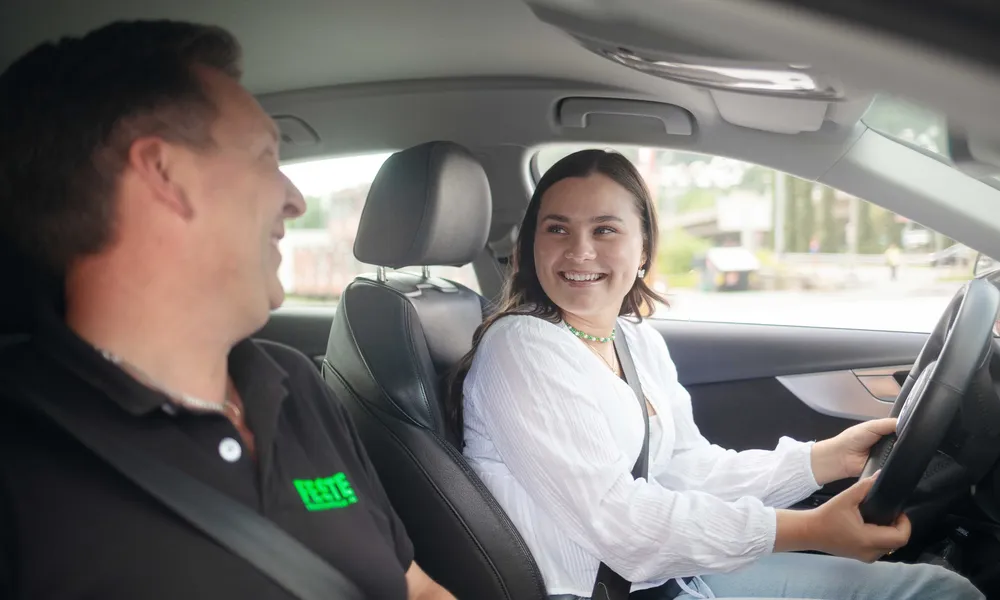
What and where should you start?
Whatever level the student is at, it's important to create a sense of achievement by safely guiding them out of their comfort zone to take on new knowledge.
Nordhordland is full of nice places to drive. But Feste has a hidden gem to offer when it comes to places to start practising – the old ferry quay in Knarvik, Snøggbåtkaien. There's little traffic there, which makes it a perfect place to practise hill starts, steering-wheel grip, steering, turning and manoeuvring, reversing, parking and braking exercises.
Once the basic technical skills are in place, it can be nice to drive on straight country roads, such as between Knarvik and Lindås, and on the old road in Meland and on to Hjertås.
5 quick tips for practising driving with your teenager
- Get involved in the student's learning.
- Attend an accompanying-driver course.
- Adapt the route and the goal of the trip to the student's level. The driving school can help you with this.
- Talk to the student before, during and after driving. Ask what they're curious to learn, what they feel they've mastered and what they're struggling with. This ensures everyone's on the same page, and that the learning is effective and fun.
- Ask questions and contact the driving school!
Remember that practising driving should be a collaboration between the student, the accompanying driver and the driving school. And that it should be exciting and full of a sense of achievement!
Got a question? Contact us by phone or email